|
|
|
|
|
|
|
|

|
Don't Miss Any Special Deals - Sign Up To Our Newsletter!
| ||||||||||||||
| CLICK HERE FOR A FULL LIST OF ALL ANTHONY SAUNDERS PRINTS BY TITLE |
|
Anthony Saunders  Aircraft Directory Aircraft Directory  Me109 Me109 |
[UP] - Spitfire - Hurricane - Lancaster - Mosquito - Kittyhawk - Wellington - Sopwith Camel - Mustang - Flying Fortress - Thunderbolt - Me109 - He111 |
| Me109 Aviation Prints by Anthony Saunders Aviation Prints |
|
|
|
|
|
|
| Text for the above items : |
Clash of Eagles by Anthony Saunders. P-51 Mustangs of the 20th Fighter Group, flying out of Kings Cliffe to engage Me109s from JG77 in a furiously contested dogfight. Below them a formation of B-17s from the 379th Bomb Group fly through the chaos, doggedly maintaining their course, as they head on to attack the huge synthetic oil refinery at Meresburg, southern Germany, on 11 September 1944. So vital was this refinery to the Nazi war machine that it became one of the most heavily defended targets in Germany, the air defences even surpassing those of Berlin. |
Break Out by Anthony Saunders. As Me109s from 3./JG77 and Me110s from ZG76 provide aerial cover, the pride of the Kriegsmarine - the battleships Bismarck - together with the heavy cruiser Prinz Eugen, destroyers Z10 Hans Lody and Z16 Friedrich Eckholdt, and a support escort fleet break out from Norwegian waters into the open sea on the evening of 21st May 1941. Heading for the rich pickings of the North Atlantic convoy routes, her ill-fated voyage would last only a few days. After a shattering victory over HMS Hood, Bismarck was caught and sunk by the Royal Navy Home Fleet a few days later on 27th May 1941. There were just 115 survivors from her complement of over 2000 men. |
Fear Nothing by Anthony Saunders. The Battle of Britian - 28th August 1940. The Battle of Britain is at its height but the threat of invasion is still a deadly reality. As the country waited, grim and expectant, for Hitlers Operation Sealion to be put into action, Blenheims of 105 Squadron make another strike against German troop barges assembling in the northern French port of Boulogne. Overhead, escorting Hurricanes of 501 Squadron engage in a savage tussle with Me109s of JG3 as the Luftwaffe pilots attempt to disperse the attacking British bombers. During the encounter three Me109s of JG3 were shot down for no British loss. |
High Summer by Anthony Saunders. On the 9th September 1940, No.92 Squadron was thrown into the Battle of Britain. They had fought bravely during the evacuation of Dunkirk, and after a spell on convoy patrol, they were thrust into the desperate climax of the greatest air battle in history. Flying Spitfires from Biggin Hill, they immediately went into action attacking massive Luftwaffe bomber formations and their escorting Me109s. Southern England was under severe threat, but the impact of 92 Squadron was immediate. During the next four months, its young pilots brought down no fewer than 127 enemy aircraft. This painting by Anthony Saunders portrays Spitfires from No.92 Sqn as they successfully engage an Me109 over the harvested fields of southern England, in August 1940. The desperate action of aerial combat is beautifully captured in this compelling and accurate reconstruction of a famous fighter squadron at war. |
Merlin Roar by Anthony Saunders. The Hawker Hurricane powered by the powerful Rolls Royce Merlin engine is shown in combat with Luftwaffe aircraft during the Battle of Britain. The Hurricane played a major role in the aerial victory along with its companion the Spitfire. |
Homeward Bound by Anthony Saunders. Summer 1940: it has been another rough day for the sasoned pilots of JG-26 Schlageter. Once again they have flown out of their base at Abbeville in northern France to escort the massed bombers of the Luftwaffe against the RAFs fighter airfields of southern England, and once again they have been locked in deadly combat with the Spitfires and Hurricanes of RAF Fighter Command. The Battle of Britain is reaching its climax and, for the first time, the Luftwaffe tastes defeat. This painting by Anthony Saunders brings to life a typical cameo from those long and arduous aerial contests, an Me109 from JG-26 has taken a hit during the fighting, the engine is overheating, and beginning to trail smoke. But the Squadron Commander, the legendary Adolf Galland, closes in to escort the stricken fighter back across the Channel. Crossing the iconic white cliffs of Dover, the drama has time to run. |
| Known Aces for this aircraft |
| Ace Name | Victories |
| Erich Hartmann | 352.00 |
| Gerhard Barkhorn | 301.00 |
| Gunther Rall | 275.00 |
| Otto Kittel | 267.00 |
| Walter Schuck | 206.00 |
| Anton Hafner | 204.00 |
| Walter Krupinski | 197.00 |
| Joachim Kirschner | 188.00 |
| Johannes "Macky" Steinhoff | 176.00 |
| Wolf-Dietrich Wilcke | 162.00 |
| Hans-Joachim Marseille | 158.00 |
| Hans Beisswenger | 152.00 |
| Friedrich-Karl Muller | 140.00 |
| Rudolf Trenkel | 138.00 |
| Herbert Ihlefeld | 137.00 |
| Walter Wolfrum | 137.00 |
| Adolf Dickfeld | 136.00 |
| Otto Fonnekold | 136.00 |
| Karl-Heinz Weber | 136.00 |
| Joachim Muncheberg | 135.00 |
| Wilhelm Lemke | 131.00 |
| Walter Dahl | 128.00 |
| Dieter Hrabak | 125.00 |
| Adolf Galland | 104.00 |
| Max-Hellmuth Ostermann | 102.00 |
| Eino Ilmari Juutilainen | 94.17 |
| Edmund "Paul" Rossmann | 93.00 |
| Helmut Bennemann | 92.00 |
| Karl Neumann | 75.00 |
| Alfred Heckmann | 71.00 |
| Helmut Ruffler | 70.00 |
| Hans-Ekkehard Bob | 60.00 |
| Gunther Seeger | 56.00 |
| Gerhard Schopfel | 45.00 |
| Johannes Schmid | 45.00 |
| Norbert Hannig | 42.00 |
| Friedrich Korner | 36.00 |
| Erwin Leykauf | 33.00 |
| Werner Hohenberg | 33.00 |
| Willi Reschke | 28.00 |
| Kurt Schade | 27.00 |
| Emil Clade | 27.00 |
| Arnold Lignitz | 25.00 |
| Friedrich Schelker | 22.00 |
| Franz von Werra | 21.00 |
| Wolfgang Schenck | 18.00 |
| Ernst Scheufele | 18.00 |
| Heinz Radlauer | 15.00 |
| Eduard Neumann | 13.00 |
| Alfred Ambs | 7.00 |
| Franz Elles | 5.00 |
| Johannes Bachmann | 5.00 |
| Manfred Leisebein | 5.00 |
| Me109 Pilot and aircrew signature details |
  Major Hans-Ekkehard Bob Our estimated value of this signature : £50 Died : 2013 | Major Hans-Ekkehard Bob After success in the Battle of Britain, Hans-Ekkehard Bob took over leadership of 9./JG54 in 1940. The following year he was awarded the Knights Cross. Transferring to the Eastern Front his victories rose steadily to 50 by September 1942. His Group later transferred back to the West for a short period, where in April 1943, he rammed a B-17 Fortress. Returning to the Eastern Front as Kommander of IV./JG3, he ended the war as Adjutant of Gallands JV44 in the West. In his 700 missions he scored 60 victories. |
  Oberst Erich Hartmann Our estimated value of this signature : £95 Died : 1993 | Oberst Erich Hartmann Erich Hartmann started his career as Paule Rossmans wingman, and it was obvious that here was a very special pilot. Promoted Staffelkapitan of 7/JG52 in July 1943, he was shot down and taken prisoner for four hours before escaping. In September he took over 9/JG52. In March 1944 he reached the 200 victory mark. He later le 4/JG52, then briefly I/JG52, and lastly Gruppenkommandeur of I/JG52. Hartmann scored a total of 352 victories, more than any other pilot in history, and was awarded the Knights Cross with Oak Leaves, Swords and Diamonds. Erich Hartmann is the top-scoring fighter pilot in history. During WWII he shot down the equivalent of almost 15 Allied squadrons in aerial combat. In some 850 aerial combats he shot down 352 Allied planes and was shot down himself 16 times. He was never wounded. Hartmanns mother taught him to fly at age 14 and in 1942 at age 20 he was flying Me109s on the Eastern front. His first combat mission was disastrous. He spoiled his leaders attack by going for the kill himself, then mistook his leaders Me109 for a Russian fighter and fled in panic. Were it not for super ace Walter Krupinski believing in Hartmanns abilities he might well have had his flying career ended. Krupinskis tutoring coupled with the fact that Hartmann was a crack shot, turned him around. He scored his first victory on November 5th 1942 and by September 1943 he had completed 300 missions with 95 victories to his credit. In August 1944 Hartmann was awarded the Diamonds to his Knights Cross - Germanys highest decoration and one that was awarded to only 27 German militar ypersonnel. Hitler made the award personally. Before the award ceremony he was demanded to hand over his sidearm before meeting with Hitler. Hartmann told the generals that if Hitler could not trust his front line officers, he could stuff his Diamonds. After a brief confusion he was allowed to carry his pistol. Hartmanns success resulted from the lessons he learned from Krupinski - do not fire until your enemys plane fills your windscreen. That resulted in a sure kill with a minimum amount of ammunition expended. Almost every kill Hartmann made was a near collision. After the war Hartmann surrendered to the Americans, who turned him over to the Russians. He was singled out for especially brutal treatment and was illegally held by the Russians until 1955 when Chansellor Adenaur personally visited Moscow and arranged for his release. The Russians had used every persuasive device known to convert Hartmann to Communism and get him to join the DDR airforce. Upon his return to Germany, his friend and fellow ace, Walter Krupinski, urged him to join the new German Air Force with other old friends such as Barkhorn and Hrabak. Since he felt he was too old to begin a new career, he did. He was given refresher training in the United States and was selected to command the Richthofen Wing in the new German Air Force, the first fighter wing to be rebuilt since the war. He filled that and other jobs in the new Luftwaffe with great distinction until his retirement. He died 20th September 1993. |
  General Gunther Rall Our estimated value of this signature : £75 Died : 2009 | General Gunther Rall A young pilot with III/JG52 at the outbreak of war. He quickly demonstrated his natural ability and leadership qualities, scoring his first air victory early in the Battle of Britain, and by July 1940 was leading 8/JG52. After transfer to the Eastern Front his air victories mounted at an astonishing rate. A crash hospitalised him but within nine months he was back in the cockpit, and, when commanding III/JG52, gained the Wings 500th victory. Gunther fought throughout the war to become the 3rd highest Ace in history with 275 victories. He was awarded the Knights Cross with Oak Leaves and Swords. Gunther Rall was born on March 10, 1918 in the small Bavarian town of Gaggenau, Baden. Immersing himself in Boy Scout activities during the difficult economic times in Germany following WW 1, Rall finished school in 1936 and joined the German Army. Influenced by a friend, who was a young officer in the Luftwaffe, Rall entered pilots school in 1938. His initial posting was with JG52. He attained his first aerial victory during the Battle of France in May of 1940. During the Battle of Britain JG52 absorbed many casualties, and Rall was promoted to Squadron Commander at the young age of 22. With his fair-hair and smooth complexion the young officer looked even younger than his years. But behind this pleasant exterior was a fierce competitor with the heart of a tiger. Later, Ralls squadron would support the attack on Crete, followed by deployment to the Southern Sector on the Eastern Front. Ralls victory totals began to mount. Following his 37 th victory, GiInther was himself shot down. He was lucky to survive the crash, but with a badly broken back he would spend most of the next year in various hospitals. In Vienna at the University Hospital he would meet his future wife, Hertha. Miraculously, Rall recovered and returned to the Luftwaffe in August of 1942. By November his score exceeded 100 and he was awarded the Oak Leaves to accompany the Knights Cross he was awarded only weeks earlier. As the War progressed against Russia, Rall began to encounter ever more experienced Soviet pilots flying better performing aircraft. Despite this fact, and being shot down several more times himself, Ralls victory tally kept rising. By March of 1944 the ace had attained 273 aerial victories. With the War now going badly for Germany, Rall was transferred to the Western Front. He was able to attain only two more victories against the swarms of Allied bombers and fighter escorts which now pounded Germany every day and night. In May of 1944 Rall was shot down by a P-47. Losing his thumb in the battle he remained out of combat until later in 1944. Ralls final assignments included flying 190Ds as Kornmodore of JG300, and flying the Me-262 jet. Ralls 275 aerial victories (attained on less than 700 combat sorties) make him the third highest scoring ace of all time. If not for the down time suffered as a result of his broken back, Rall might have actually equaled or exceeded Erich Hartmanns alltime record of 352 aerial victories. Rall was not much for socializing during the War. He was a fierce competitor with a businessmans attitude about flying. He was an excellent marksman, and possibly the best deflection shot expert of the War. He continued to fly with the Bundeslufwaffe following the War, serving as its Commander-In Chief in 1970-74. Sadly Gunther Rall died on 4th October 2009. |
  Hauptmann Karl-Fritz Schlossstein Our estimated value of this signature : £35 Died : 2017 | Hauptmann Karl-Fritz Schlossstein Karl-Fritz Schlossstein initially flew Me110 heavy destroyers with JG5, when th Group first arrived in Norway in 1942 to provide air cover for the convoys supplying the rapidly increasing German garrison in that country. He commanded 13(Z)/JG5 from the summer of 1942 to June 1943, and then converted to fly Me109s. Later in Norway he flew the Me410 Hornet with ZG76, but finished the war with JG54 Greenhearts flying Fw190s in the Defence of the Reich. He died on 18th July 2017. |
 Oberleutnant Kurt Schulze Our estimated value of this signature : £35 | Oberleutnant Kurt Schulze After serving with the Air Signals Corps during the Blitzkrieg through the Low Countries and France, Kurt Schulze then flew as a Me110 Wireless Operator over southern Russia, before returning to the west. Here he flew night missions against England in Do217s with I./KG2. In September 1943 he transferred to train as a fighter pilot, and flew 65 missions in Me109s with III./JG5 on the Arctic Front, scoring three victories. In November 1944 he flew in the ill-fated defence of the German battleship Tirpitz. In March 1945 he commanded I./JG51 in the encircled east German city of Danzig, before returning to Norway in May 1945 to command 16./JG5. |
 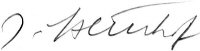 General Johannes Steinhoff Our estimated value of this signature : £80 Died : 1994 | General Johannes Steinhoff By early 1940 Macky Steinhoff was leading 4 / JG-52 during the Battle of Britain. He was then transferred to the eastern front where his success continued. In the final stages of the defence of the Reich he joined JV-44 flying the ME 262 in which he scored 6 victories before being seriously burned in a crash. He flew 939 missions scored 178 victories and was awarded the Knights Cross with Oak leaves and swords. |
|
Contact Details |
|
Sign Up To Our Newsletter!
This website is owned by Cranston Fine Arts. Torwood House, Torwoodhill Road, Rhu, Helensburgh, Scotland, G848LE Contact: Tel: (+44) (0) 1436 820269. Email: cranstonorders -at- outlook.com |
 |


