|
|
|
|
|
|
|
|

|
Don't Miss Any Special Deals - Sign Up To Our Newsletter!
| ||||||||||||||
| CLICK HERE FOR A FULL LIST OF ALL ANTHONY SAUNDERS PRINTS BY TITLE |
|


Flight Lieutenant Ray Harrington
Ray joined the RAF in 1941, completing his training in South Africa. In January 1944 he was posted to 603 Squadron flying Beaufighters in North Africa. Here he teamed up with navigator, Warrant Officer A.E. 'Bert' Winwood, and from where they launched attacks across the Mediterranean into Crete, Greece and the Aegean Islands against shipping, harbour installations and enemy aircraft with much success. In December 1944 they were posted to 235 Squadron Coastal Command, part of the Banff Strike Wing, converting to Mosquitos. In April 1945 they were shot down following a strike in the Kattegat, but avoided capture and with the help of the Danish resistance made it home, where they continued to fly again from Banff.


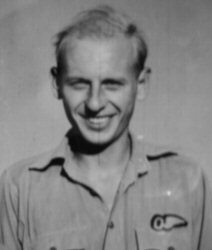
| Flight Lieutenant Ray Harrington - Signed Aviation Art Prints, Paintings and Drawings |
|
| Text for the above items : |
Return From Leipzig by Anthony Saunders. Mosquitos of 105 Squadron, Marham. No. 105 Squadron, stationed at Marham, Norfolk, became the first Royal Air Force unit to become operational flying the Mosquito B. Mk. IV bomber on 11th April 1942. The painting shows 105 Squadron on the raid of 10th April 1945, to the Wahren railway marshalling yards at Leipzig, Germany. |
| Flight Lieutenant Ray Harrington Aircraft details |
 Mosquito Manufacturer : De Havilland Built : 7781 | Mosquito Used as a night fighter, fighter bomber, bomber and Photo-reconnaissance, with a crew of two, Maximum speed was 425 mph, at 30,300 feet, 380mph at 17,000ft. and a ceiling of 36,000feet, maximum range 3,500 miles. the Mosquito was armed with four 20mm Hospano cannon in belly and four .303 inch browning machine guns in nose. Coastal strike aircraft had eight 3-inch Rockets under the wings, and one 57mm shell gun in belly. The Mossie at it was known made its first flight on 25th November 1940, and the mosquito made its first operational flight for the Royal Air Force as a reconnaissance unit based at Benson. In early 1942, a modified version (mark II) operated as a night fighter with 157 and 23 squadron's. In April 1943 the first De Haviland Mosquito saw service in the Far east and in 1944 The Mosquito was used at Coastal Command in its strike wings. Bomber Commands offensive against Germany saw many Mosquitos, used as photo Reconnaissance aircraft, Fighter Escorts, and Path Finders. The Mosquito stayed in service with the Royal Air Force until 1955. and a total of 7781 mosquito's were built. |
|
Contact Details |
|
Sign Up To Our Newsletter!
This website is owned by Cranston Fine Arts. Torwood House, Torwoodhill Road, Rhu, Helensburgh, Scotland, G848LE Contact: Tel: (+44) (0) 1436 820269. Email: cranstonorders -at- outlook.com |
 |


