|
|
|
|
|
|
|
|

|
Don't Miss Any Special Deals - Sign Up To Our Newsletter!
| ||||||||||||||
| CLICK HERE FOR A FULL LIST OF ALL ANTHONY SAUNDERS PRINTS BY TITLE |
|

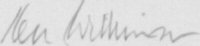
Flying Officer Ken Wilkinson
Battle of Britain pilot flying Hurricanes, he flew Spitfires with 611 Sqn and then 616 Sqn at Kirton-in-Lindsey and 19 Sqn at Fowlmere during 1940 and after a spell instructing returned to operations on Spitfires, with 234 and 165 Squadrons. After spending time with 53, 24 and 10 Operational Training Units, he left the RAF in November 1945 and served in the RAFVR.
Ken said :
From 1st September 1939 I wrote myself off. I thought, 'you've got no chance' lasting through whatever is going to be. It was quite obvious, in the way the Germans were moving, they were going to make a hell of a war out of it, so I was ready for war. I can remember saying 'we've got to stop this fellow Hitler'. When you think of all the thousands of citizens that were being killed by this absurd bombing. They had to pay for it didn't they. Yes, we lost people. Friends that didn't come back. I don't think we were the sort of people to brood over it, ever. You have to get into an attitude to make sure that you're as cold as a fish. Once someone has failed to return, that's it. Fortune smiled on me and not on some of the others. I can only say that whoever it was who popped off at me, wasn't a very good marksman. It transpired that we were doing something far more important than we thought. As far as we were concerned, it was just that there were some untidy creatures from over the other side of the channel, trying to bomb England and the United Kingdom. And we didn't want them to bomb us. After all, we never asked the Germans to start this nonsense, did we? But they did, and we had to stop them, and we did. It's our country. You die for you country.
|
|
|
|
| Flying Officer Ken Wilkinson - Signed Aviation Art Prints, Paintings and Drawings |
|
|
| Text for the above items : |
Merlin Roar by Anthony Saunders. The Hawker Hurricane powered by the powerful Rolls Royce Merlin engine is shown in combat with Luftwaffe aircraft during the Battle of Britain. The Hurricane played a major role in the aerial victory along with its companion the Spitfire. |
Decisive Blow by Anthony Saunders. The Luftwaffe had done everything in its power to pummel London into submission but they failed. By the end of September 1940 their losses were mounting. For weeks since the early days of September, London had been the main target for the Luftwaffe and during that time Luftwaffe High Command had grown increasingly despondent as their losses steadily mounted. Far from being on the brink of collapse RAF Fighter Command, though vastly outnumbered, had shown an incredible resilience. The fighting had reached a dramatic climax on Sunday 15th September when, bloodied and bruised, the Luftwaffe had lost the upper hand on a day of intense combat that had culminated with a humiliating retreat. Almost every day that had passed since then had seen the Luftwaffe do everything in its power to pummel London and regain the initiative, but the daylight raids were becoming increasingly costly. On Friday 27th September, 80 days after the Battle of Britain had officially begun, the Luftwaffe came once more, this time concentrating on the fastest bombers they had - Ju88s and Bf110s. And they came in force, principally targeting London and Bristol. Anthony Saunders' superb painting depicts one of these raids, this time by bombers from KG77 as they head over the Medway Estuary, east of the City of London, in an attempt to attack the capital's warehouses and docks. Among the many units defending the capital that day was 92 Squadron from Biggin Hill and Anthony portrays the Spitfire of Pilot Officer Geoffrey Wellum in his dramatic piece. With a deft flick of the rudder Wellum banks his fighter away to port seconds after sharing in the destruction of a Ju88. It was just one of more than 50 German aircraft destroyed by the RAF during the day. |
| Flying Officer Ken Wilkinson Aircraft details |
 Hurricane Manufacturer : Hawker Built : 14533 | Hurricane Royal Air Force Fighter, the Hawker Hurricane had a top speed of 320mph, at 18,200 feet and 340mph at 17,500, ceiling of 34,200 and a range of 935 miles. The Hurricane was armed with eight fixed wing mounted .303 browning machine guns in the Mark I and twelve .303 browning's in the MKIIB in the Hurricane MKIIC it had four 20mm cannon. All time classic fighter the Hurricane was designed in 1933-1934, the first prototype flew in June 1936 and a contract for 600 for the Royal Air Force was placed. The first production model flew ion the 12th October 1937 and 111 squadron of the Royal Air Force received the first Hurricanes in January 1938. By the outbreak of World war two the Royal Air Force had 18 operational squadrons of Hurricanes. During the Battle of Britain a total of 1715 Hurricanes took part, (which was more than the rest of the aircraft of the Royal air force put together) and almost 75% of the Victories during the Battle of Britain went to hurricane pilots. The Hawker Hurricane was used in all theatres during World war two, and in many roles. in total 14,533 Hurricanes were built. |
|
Contact Details |
|
Sign Up To Our Newsletter!
This website is owned by Cranston Fine Arts. Torwood House, Torwoodhill Road, Rhu, Helensburgh, Scotland, G848LE Contact: Tel: (+44) (0) 1436 820269. Email: cranstonorders -at- outlook.com |
 |


